

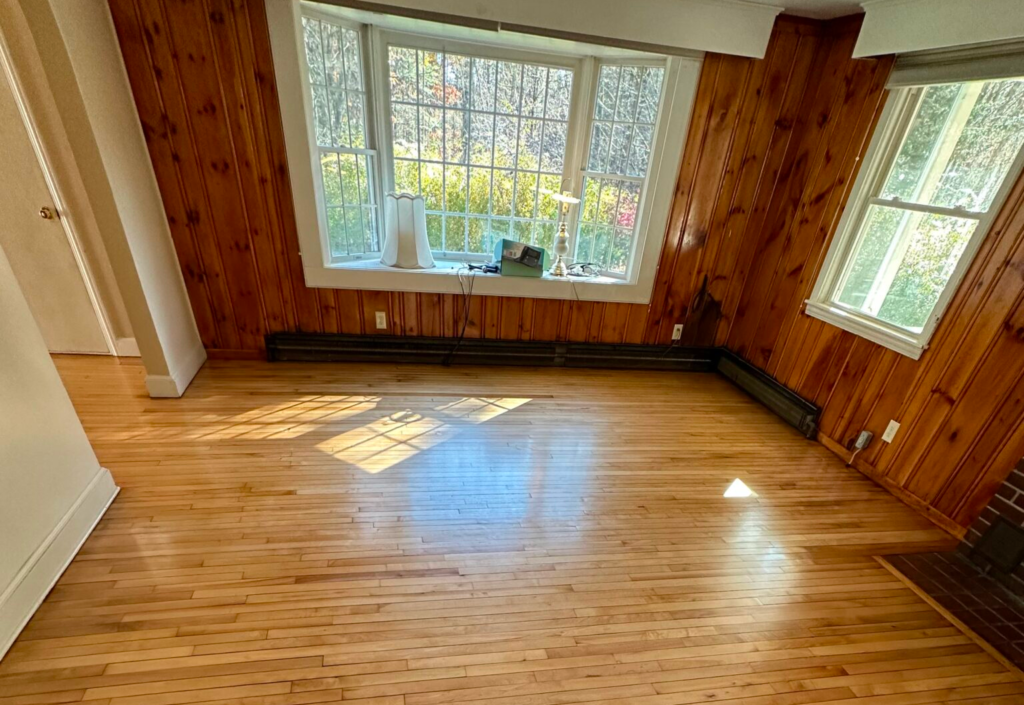
Your hardwood floors take a beating over the years. Scratches from pets, water stains from that one spilled glass of wine, boards that creak or cup from humidity – it all adds up. When your floors start showing their age, you’re faced with a big question: do you repair what’s there, or is it time to start fresh with a full replacement?
The answer isn’t always obvious, and the wrong choice can cost you thousands of dollars. This guide breaks down the key differences between hardwood floor repair vs. replacement so you can make a confident, informed decision for your home.
Why This Decision Matters More Than You Think
Hardwood flooring is one of the most valuable features in any home. Done right, it can last 50 to 100 years – but only if it’s properly maintained and repaired when damage occurs. Rushing into a full replacement when a repair would do the job means spending money you don’t have to. On the flip side, patching floors that are too far gone can give you short-term relief with long-term headaches.
Understanding when each option makes sense starts with taking an honest look at what’s actually wrong with your floors.
Signs That Hardwood Floor Repair Is the Right Call
In many cases, hardwood floors can be brought back to life without replacing a single board. Here are the situations where repair is usually the smarter move.
Surface Scratches and Scuffs
Everyday scratches from furniture, pets, and foot traffic are completely normal – and completely fixable. Light surface scratches can often be buffed out or touched up, and deeper ones can be addressed during a professional refinishing pass. No new wood needed.
Damage Limited to a Few Boards
If the problem is isolated to a handful of planks – maybe near a doorway or around a kitchen sink – hardwood floor repair is almost always more cost-effective than tearing everything out. A skilled contractor can remove and replace individual boards, then blend the repair with refinishing so it’s virtually undetectable.
Squeaky or Loose Boards
Squeaky floors are annoying, but they’re usually not a sign of serious structural trouble. Most of the time the sound comes from boards rubbing against each other or against subfloor nails that have worked loose over time. This is a repair job, not a replacement job.
Minor Water Damage or Cupping
If moisture got under your floors and caused some boards to cup slightly, you may still be in repair territory – especially if the source of the moisture has been addressed. Once the wood dries out fully, a professional can sand and refinish the affected area to restore a flat, even surface.
Dull or Faded Finish
Floors that look worn and tired but are structurally sound are great candidates for floor refinishing. Refinishing strips away the old finish, sands the wood smooth, and applies fresh stain and sealant. The result looks like brand new flooring at a fraction of the cost of replacement.
When Hardwood Floor Replacement Makes More Sense
There are situations where repair simply isn’t enough. Here’s when replacement becomes the more practical – and sometimes the only – option.
Severe or Widespread Water Damage
Standing water that sat for an extended period, a slow leak that went undetected for months, or flooding can all cause deep structural damage. When wood has warped badly, buckled, or shows signs of rot, it usually can’t be saved. Replacement is the path forward.
Subfloor Problems Underneath
Sometimes the issue isn’t the hardwood itself – it’s what’s beneath it. If the subfloor has deteriorated from moisture or rot, patching the wood on top won’t solve anything. You’ll need to address the subfloor, and a full replacement of the hardwood above typically goes along with that.
Too Little Wood Left for Sanding
Solid hardwood can only be sanded and refinished so many times before the wood gets too thin. If your floors have already been refinished several times, sanding again risks going through the wood entirely. At that point, replacement is the safer long-term move.
More Than 30% of the Floor Is Damaged
When damage is spread across more than a third of your floor, the math often starts to favor replacement over repair. Replacing isolated sections here and there across a large area gets expensive quickly, and the results can look inconsistent no matter how good the craftsmanship is.
Outdated Style or Mismatched Appearance
This one isn’t about damage – it’s about aesthetics. If your current floors don’t match your renovation vision, or if years of piecemeal repairs have left a patchwork of mismatched wood tones, a full replacement lets you start fresh with a clean, consistent look throughout the space.
What Does It Actually Cost?
Budget plays a real role in this decision. Spot repairs on a few boards are typically the most affordable option. Professional refinishing of the entire floor costs more but is still significantly less than replacement – and can completely transform floors that are in decent structural shape. Full replacement is the biggest investment, but it’s sometimes the most cost-effective long-term choice when damage is widespread or the existing floors are past their useful life.
Contact Expert Flooring LLC for a free estimate – we’ll give you a straight answer about what your floors need and what they don’t.
Why a Professional Eye Makes All the Difference
Here’s the thing about hardwood floor damage: what you see on the surface doesn’t always tell the full story. A board that looks fine might be hiding moisture underneath. A floor that looks rough after years of pet scratches might actually be structurally solid and a perfect candidate for refinishing.
A professional flooring contractor looks at the whole picture – the wood, the finish, the subfloor, moisture levels, and the scope of the damage – before recommending anything. At Expert Flooring LLC, we walk every client through what we find and explain the options clearly so you’re never left guessing.
Still Not Sure? Let’s Take a Look Together.
Every floor is different, and every situation has its own nuances. The best way to know for certain whether you need hardwood floor repair or replacement is to get a professional set of eyes on it.
Expert Flooring LLC has been helping homeowners in the greater Springfield, MA area restore and transform their floors for years. We specialize in hardwood floor repair, floor refinishing, and full installations – and we’re always upfront about what your floors actually need. Schedule your free estimate today and let’s figure out the best plan for your home.