

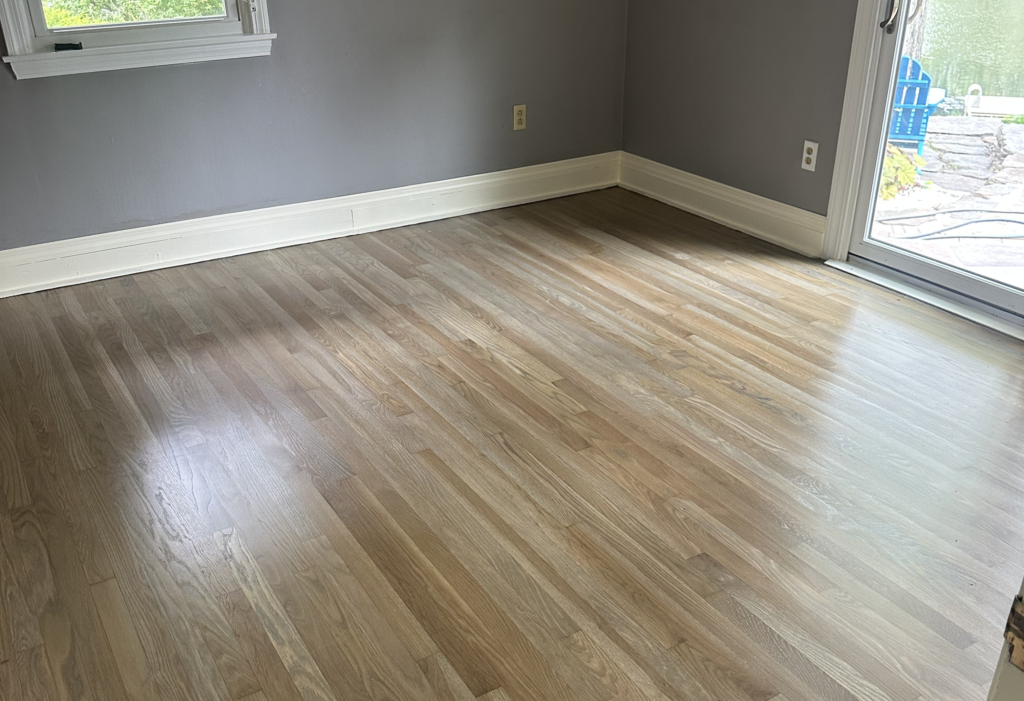
If you’ve decided on hardwood floors, you’ve already made a great choice. But now comes the next question that trips up a lot of homeowners: solid or engineered? They both look like real wood — because they both are real wood — but they perform very differently depending on where you’re installing them, what your budget is, and how long you want them to last.
This guide breaks down everything you need to know about solid vs. engineered hardwood flooring so you can make a confident, informed decision for your home.
What’s the Difference? Starting with Construction
The biggest difference between the two comes down to how they’re built.
Solid hardwood is exactly what the name suggests — each plank is milled from a single, solid piece of wood, typically 3/4 inch thick. Species like oak, maple, hickory, walnut, and cherry are popular choices. Because it’s one piece of real wood all the way through, solid hardwood can be sanded and refinished many times over its lifetime, which is why it’s not unusual to find solid hardwood floors in homes that are 80 or 100 years old and still going strong.
Engineered hardwood is also real wood — but it’s constructed differently. Each plank has a top layer of genuine hardwood bonded to a core of high-quality plywood or high-density fiberboard, with layers stacked in a crisscross pattern. That layered construction is what gives engineered hardwood its key advantage: dimensional stability. It’s far less likely to expand, contract, warp, or cup in response to humidity and temperature changes than solid wood.
Both look identical once installed. The difference is entirely in how they’re built and how they perform.
Where Can Each One Be Installed?
This is one of the most practical factors in the decision — and it’s where the two types differ most.
Solid hardwood performs best in above-grade spaces: living rooms, dining rooms, bedrooms, and hallways. Because it’s sensitive to moisture and humidity, it’s not recommended for basements, over concrete slabs, or in rooms where water exposure is likely. It also typically needs to be nailed or stapled down to a wood subfloor, which means the subfloor condition matters a lot.
Engineered hardwood is far more versatile. It can go anywhere solid hardwood goes, but it also works in basements, over concrete, over radiant heat systems, and in spaces that experience more humidity fluctuation. It can be nailed, glued, or floated depending on the subfloor — which also makes installation faster and sometimes less expensive.
If you’re installing on the ground level or below, or if your home has a concrete slab foundation, engineered hardwood is almost certainly the right call.
How Moisture and Humidity Affect Each Type
Moisture is wood’s biggest enemy — and this is where solid and engineered hardwood diverge most sharply.
Solid hardwood is a natural material that breathes with its environment. As humidity rises, wood absorbs moisture and expands. As humidity drops, it releases moisture and contracts. In moderate, stable conditions this is manageable, but in homes with significant seasonal humidity swings, it can lead to gapping in dry months and cupping or buckling in humid ones. This is why solid hardwood is generally not recommended for below-grade installations or climates with extreme humidity changes.
Engineered hardwood handles moisture much better. The crisscross layered core counteracts the natural tendency of wood to move with humidity, keeping the planks far more stable across changing conditions. This doesn’t make it waterproof — standing water is still a problem for any wood floor — but it does make it significantly more forgiving in kitchens, basements, and regions with high humidity.
If you already have hardwood floors showing signs of moisture damage, our team can help assess whether hardwood floor repair is possible or whether replacement is the better route.
Durability: How Do They Compare?
When it comes to surface durability — resistance to scratches, dents, and everyday wear — solid and engineered hardwood are essentially equal. The top layer of an engineered plank is genuine hardwood, so it performs the same way underfoot as solid wood of the same species. Choose a harder species like oak or hickory and you’ll get excellent durability from either type.
Where they differ is in how many times they can be refinished.
Solid hardwood can typically be sanded and refinished anywhere from 4 to 10 times over its lifetime depending on plank thickness. That’s one of its biggest long-term advantages — when the finish gets worn or you want to update the color, you simply sand it down and start fresh.
Engineered hardwood can also be refinished, but how many times depends on the thickness of the top veneer layer. Thinner veneers may only allow one refinish; thicker ones around 4mm or more can handle two to four. When shopping for engineered hardwood, always check the veneer thickness — it’s one of the most important quality indicators and directly impacts how long your floor will last.
If you have existing hardwood floors that need refinishing regardless of type, our floor refinishing service can bring them back to life at a fraction of the cost of replacement.
Cost: Which One Is More Affordable?
Generally speaking, engineered hardwood costs less than solid hardwood — both in materials and installation. The installation process for solid hardwood is more labor-intensive, typically requiring a nail-down method that demands a skilled flooring professional and a properly prepared wood subfloor. Engineered hardwood offers more flexibility with floating or glue-down methods, which can reduce both labor time and cost.
That said, the price gap narrows at the higher end of the market. Premium engineered hardwood with thick veneers and quality plywood cores can be comparable in price to mid-range solid hardwood. As with most flooring decisions, you get what you pay for — and investing in a higher quality product, whether solid or engineered, pays off in longevity and appearance over time.
If you’re unsure what your floors actually need — repair, refinishing, or full replacement — check out our guide on hardwood floor repair vs. replacement before making any decisions.
Style and Design Options
Both solid and engineered hardwood come in a wide range of species, stains, and finishes. However, engineered hardwood tends to offer more design flexibility in one important area: plank width.
Because of its layered construction, engineered hardwood is more dimensionally stable in wider formats. Wide plank flooring — which is very popular in modern and contemporary interiors — is often only achievable with engineered wood, since wide solid hardwood planks are more prone to gapping and movement with seasonal humidity changes.
Engineered hardwood also opens the door to exotic and softer wood species that would be too unstable in solid form, giving you more options to achieve a unique, custom look. So if you’re drawn to that open, airy wide-plank aesthetic that’s trending right now, engineered hardwood is typically the better path to get there.
Maintenance: Day to Day and Long Term
For day-to-day cleaning, solid and engineered hardwood are virtually identical. Both require regular sweeping or vacuuming and occasional damp mopping with a cleaner designed for hardwood. Avoid excessive water on either type — standing water is damaging to both.
Where the maintenance story differs is over the long term. Because solid hardwood can be refinished more times, it’s easier to keep looking brand new decade after decade. A full sand and refinish restores it completely. With engineered hardwood, you have fewer refinishing opportunities, so protecting the finish from the start — using felt pads on furniture, rugs in high-traffic areas, and keeping humidity levels stable — matters more.
The good news is that with proper care, both types of hardwood will look beautiful for many years before any refinishing is needed at all.
Sound and Feel Underfoot
One area where solid hardwood has a slight edge is the feel and sound underfoot. Solid hardwood has a dense, satisfying feel when you walk on it — there’s a solidity to every step that’s hard to replicate.
Engineered hardwood, especially when installed using a floating method, can sometimes sound slightly hollow underfoot. However, gluing or nailing down engineered planks — and choosing thicker, higher-quality products — largely eliminates this difference. Premium engineered hardwood installed correctly is virtually indistinguishable from solid underfoot.
Quick Comparison: Solid vs. Engineered at a Glance
Solid hardwood — best for above-grade installations, maximum refinishing potential, longest lifespan, classic feel underfoot, higher upfront cost, sensitive to moisture.
Engineered hardwood — best for basements and concrete subfloors, radiant heat systems, wider plank designs, more budget-friendly, better moisture resistance, fewer refinishing opportunities.
So Which One Should You Choose?
Choose solid hardwood if you’re installing above grade on a wood subfloor, you want the maximum number of refinishes over the floor’s lifetime, and you’re willing to invest more upfront for a floor that could genuinely last generations.
Choose engineered hardwood if you’re installing in a basement or over concrete, you want wider planks or more exotic species options, you’re working with a tighter budget, or your home experiences significant seasonal humidity changes.
Both are excellent choices. Both are real wood. The right answer simply depends on where you’re installing and what matters most to you.
Not Sure Where to Start? We Can Help.
Whether you’re leaning toward solid or engineered, the best next step is talking to a professional who can look at your specific space and give you an honest recommendation. At Expert Flooring LLC, we specialize in hardwood floor installation, repair, and refinishing — and we’ll always tell you what your home actually needs rather than upsell you on something it doesn’t.
View our services or schedule your free estimate today and let’s figure out the best flooring plan for your space.