

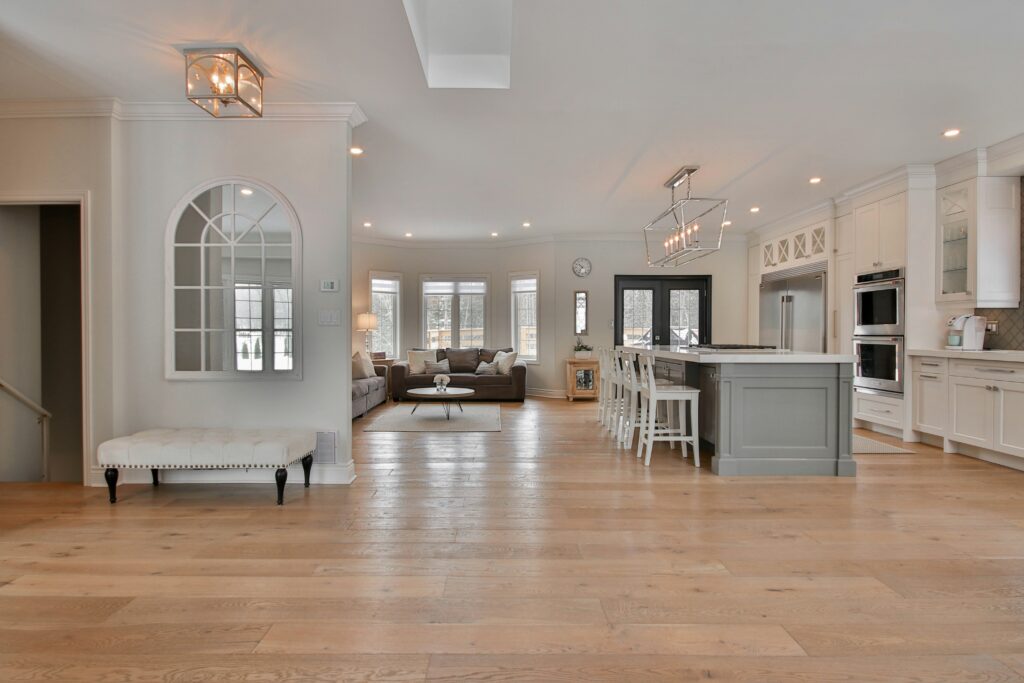
Living in New England means your home takes a beating that homeowners in other parts of the country simply don’t deal with. Frigid winters that drop temperatures well below freezing. Spring thaws that bring flooding and moisture. Humid summers that cause wood to expand and swell. Fall mud and leaves tracked in through every door. Your floors need to handle all of it — and look good doing it.
Choosing the best flooring for New England weather isn’t just about aesthetics. It’s about picking a material that can stand up to extreme temperature swings, high humidity, road salt, and the general punishment that comes with living in a four-season climate. This guide breaks down your best options so you can make a smart, informed decision for your home.
What New England Weather Actually Does to Your Floors
Before diving into the options, it helps to understand what you’re actually up against. Massachusetts and the greater New England region put floors through a unique set of challenges.
Humidity swings. Summer humidity in Western MA can push indoor relative humidity well above comfortable levels, causing wood and other organic flooring materials to expand. Winter brings the opposite problem — dry air from heating systems pulls moisture out of wood floors, causing them to shrink and gap. This constant expansion and contraction is one of the biggest causes of floor damage in the region.
Road salt and moisture. From November through March, boots tracked in from outside carry salt, sand, slush, and water onto your floors every single day. Salt is particularly damaging — it’s abrasive, it attracts moisture, and it can degrade finishes and stain wood if not cleaned up promptly.
Temperature fluctuations. New England homes experience dramatic temperature changes between seasons, and sometimes within a single day. Flooring materials that can’t handle this kind of thermal movement will crack, warp, gap, or buckle over time.
Older home construction. A large percentage of homes in Springfield and Western Massachusetts are older properties, many with uneven subfloors, drafty crawl spaces, and basement moisture issues that add an extra layer of challenge to any flooring decision.
With all that in mind, here are the best flooring options for New England homes.
Engineered Hardwood: The Best of Both Worlds
For most New England homeowners who want the look and feel of real wood, engineered hardwood is the top recommendation. It’s constructed with a genuine hardwood top layer bonded to a stable plywood core, and that layered construction makes it significantly more resistant to the humidity swings and temperature changes that give solid hardwood trouble.
Engineered hardwood can be installed over concrete slabs and in basements where solid hardwood can’t go. It handles the dry winters and humid summers of Western MA far better than solid wood, and it comes in the same wide range of species, stains, and finishes — so you’re not sacrificing anything on the aesthetic side.
It can also be refinished, though fewer times than solid hardwood. Choosing a product with a thicker wear layer gives you more refinishing opportunities and a longer lifespan.
If you already have engineered hardwood floors that are looking worn, our floor refinishing service can bring them back to life without the cost of replacement.
Solid Hardwood: Still a Great Choice in the Right Rooms
Solid hardwood remains one of the most desirable flooring options in any home — and in New England, it performs beautifully when installed in the right spaces and properly maintained.
Above-grade rooms with a wood subfloor — living rooms, dining rooms, bedrooms, and hallways — are ideal for solid hardwood. In these spaces, with proper humidity management, solid hardwood can last generations. Many older homes in Springfield and the surrounding area still have their original solid hardwood floors from the early 1900s, which speaks to just how durable this material is when properly cared for.
The key to solid hardwood success in New England is humidity control. Keeping indoor humidity between 35% and 55% year-round — using a humidifier in winter and air conditioning or a dehumidifier in summer — prevents the excessive expansion and contraction that leads to gapping and cupping.
Solid hardwood is not recommended for basements, over concrete, or in areas with significant moisture exposure. For those spaces, engineered hardwood is the smarter choice.
Want to understand the full difference between the two? Read our detailed guide on solid vs. engineered hardwood flooring to help you decide which is right for your specific situation.
Luxury Vinyl Plank: The Practical Powerhouse
Luxury vinyl plank — often called LVP — has become one of the most popular flooring choices in New England homes over the last decade, and for good reason. It’s 100% waterproof, extremely durable, comfortable underfoot, and available in designs that convincingly mimic the look of hardwood and stone.
For New England specifically, LVP’s waterproof construction makes it an excellent choice for entryways, mudrooms, kitchens, bathrooms, and basements — anywhere that sees heavy moisture from tracked-in snow, salt, and rain. It handles temperature changes well and won’t warp, cup, or gap the way wood does in fluctuating conditions.
LVP is also one of the more affordable flooring options, and modern products have come a long way in terms of realistic appearance and texture. For homeowners who want a low-maintenance, highly durable floor that can take whatever New England throws at it, LVP is hard to beat.
The tradeoff compared to hardwood is longevity and refinishability. LVP can’t be refinished — when it’s worn out, it needs to be replaced. And while modern LVP looks very realistic, it doesn’t have the same warmth and authenticity underfoot that real wood does.
Tile: The Best Option for Wet Areas
Ceramic and porcelain tile is the gold standard for bathrooms, laundry rooms, and mudrooms — spaces where water exposure is frequent and a waterproof surface is non-negotiable. Porcelain in particular is extremely dense and virtually impervious to moisture, making it well-suited to New England’s wet seasons.
Tile also pairs exceptionally well with radiant floor heating, which is an increasingly popular upgrade in Massachusetts homes. Cold tile floors are a common complaint in winter, but with radiant heat underneath, tile becomes one of the warmest and most comfortable surfaces you can walk on during a New England winter.
The downsides of tile are hardness underfoot, cold feel without radiant heat, and the potential for grout lines to collect dirt and require maintenance. It’s also one of the more expensive options to install due to the labor involved.
Carpet: Still the Warmest Option for Bedrooms
Carpet gets overlooked in a lot of modern flooring conversations, but it still has a legitimate place in New England homes — specifically in bedrooms and finished basements where warmth and comfort underfoot are priorities.
In a climate where temperatures regularly drop below freezing, stepping out of bed onto warm carpet on a cold January morning is genuinely pleasant in a way that no hard surface flooring can replicate. Carpet also adds insulation value, helping to retain heat in rooms and reduce energy costs during long heating seasons.
The downsides are well known — carpet traps allergens, requires more frequent cleaning, and doesn’t hold up well in high-traffic or moisture-prone areas. For living rooms, kitchens, and entryways in a New England home, hardwood or LVP is almost always the better choice. But in low-traffic bedrooms, carpet remains a comfortable and practical option.
What About Laminate?
Laminate flooring is often considered as a budget alternative to hardwood, and while it has improved significantly in quality over the years, it has limitations that matter in New England specifically. Standard laminate is not waterproof — the fiberboard core swells permanently when water penetrates the seams, which is a real risk in a climate with heavy winter moisture tracked indoors.
Waterproof laminate products have addressed this to some degree, but if budget is a concern and you want a waterproof hard-surface floor, luxury vinyl plank typically offers better performance for a similar price point. If you’re committed to laminate, always choose a waterproof product and be diligent about cleaning up moisture promptly.
The Best Flooring by Room for New England Homes
Living rooms and dining rooms — solid or engineered hardwood for warmth, beauty, and long-term value. Kitchens — engineered hardwood or luxury vinyl plank for durability and moisture resistance. Entryways and mudrooms — luxury vinyl plank or tile for maximum moisture and salt resistance. Bathrooms — porcelain tile, ideally with radiant heat. Bedrooms — solid hardwood, engineered hardwood, or carpet depending on preference and budget. Basements — engineered hardwood or luxury vinyl plank, never solid hardwood.
Protecting Your Floors Through New England Seasons
Regardless of which flooring you choose, a few simple habits go a long way toward protecting your investment in a New England climate.
Use quality mats at every entry point to capture salt, sand, and moisture before it reaches your floors. Remove wet boots and shoes at the door from November through April. Maintain indoor humidity between 35% and 55% year-round. Clean up spills and tracked-in moisture immediately. Have hardwood floors professionally refinished when the finish starts to show wear — before the wood itself becomes vulnerable.
If your existing hardwood floors are showing wear, damage, or moisture issues, our team at Expert Flooring LLC can help. We specialize in hardwood floor repair and refinishing throughout Springfield and Western Massachusetts, and we offer free estimates with honest recommendations — no pressure, no upselling.
Contact us today to schedule your free estimate and let’s find the best flooring solution for your New England home.