

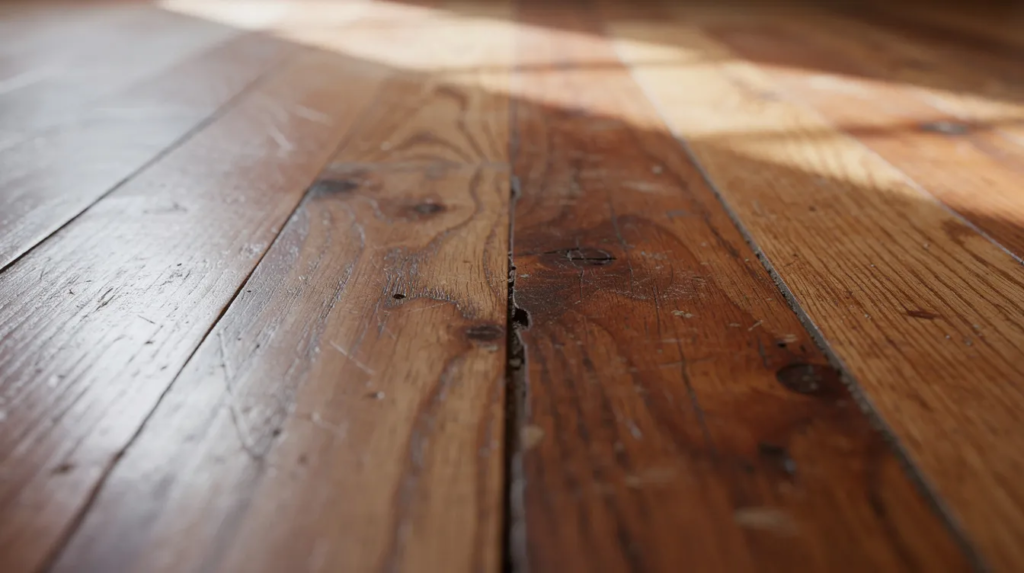
Introduction: Why Hardwood Floor Care Matters
Homes built between the 1920s and 1970s across Agawam, Springfield, and Longmeadow often still have their original solid oak or maple hardwood floors. These floors are among the most valuable interior features in an older house, and replacing a 500-square-foot section runs $10,000 to $15,000 in today’s labor and materials costs. The right approach to maintenance can push that replacement off by decades.
These hardwood flooring maintenance tips apply to both solid hardwood and engineered hardwood, though long-term options like full sanding differ between them. Floor maintenance spans daily sweeping, weekly vacuuming, seasonal humidity control, and multi-year interventions like screening and recoating. Each layer of care prevents damage from escalating to the point where you need new floors.
Expert Flooring LLC, based in Agawam, MA, specializes in hardwood refinishing and repair. For floors past the point of DIY care, sanding, staining, and sealing cost far less than tearing out and replacing the wood. The sections below cover how to maintain hardwood floors through daily habits, humidity management, and damage prevention, then explain when to call a pro.
Know Your Hardwood Floors Before You Clean
Before you pick up a hardwood floor cleaner or mop, identify what you’re working with. The floor type and finish determine which products and techniques are safe.
- Solid hardwood is milled from a single piece of wood, typically ¾ inch thick in older New England homes. It can be sanded and refinished 5 to 10 times over a 50- to 100-year lifespan.
- Engineered hardwood has a real wood veneer (2 to 6 mm) over a plywood or HDF core. Veneers under 2 mm allow no full sanding; 3 mm veneers allow one refinish; 4 to 6 mm veneers allow one to three. Consult a professional for engineered hardwood refinishing to avoid cutting through the veneer.
- Finishes vary. Modern floors often have factory-applied aluminum oxide over urethane, which is very hard-wearing. Site-applied polyurethane (oil based or water-based) is common on refinished floors. Older homes may have wax or penetrating oil finishes. Wax finishes cannot be recoated with polyurethane without stripping the wax first.
Simple finish test: Place a water droplet in an inconspicuous corner. If it beads up and stays, you have a sealed surface finish. If it soaks in or leaves a dark spot, you likely have a penetrating oil or wax finish. When in doubt, ask a flooring professional before choosing products.
Daily and Weekly Cleaning: How to Clean Hardwood Floors Safely
Grit tracked in on shoes and pet hair act like sandpaper on your floor’s finish. Daily cleaning removes abrasive dirt and pet hair before they grind into the surface. Sweep daily to prevent debris buildup that scratches floors over time.
Daily (5 minutes or less):
- Use a microfiber dust mop more frequently in high traffic areas: kitchens, hallways, foyers, and near every door. Microfiber dust traps particles instead of pushing them around like a stiff broom.
- Keeping pet nails trimmed prevents scratches on hardwood floors. Combine this with daily sweeping for best results.
Weekly:
- Vacuum the entire bare floor on the bare floor setting with the beater bar turned off and a soft brush attachment. Robot vacuums work if their wheels are clean.
- Vacuum before mopping to avoid scratches from debris still on the surface.
- Spot-clean sticky areas with a slightly damp microfiber cloth and a pH-neutral hardwood floor cleaner. Dry immediately; avoid letting hardwood floors get too wet during cleaning.
What to skip: No steam mops, which force hot moisture into seams. No vinegar-and-water mixtures; vinegar has a pH of 2.5 to 3.5 and dulls polyurethane finishes over repeated use. No oil soaps like Murphy’s on sealed surfaces; they leave residue that blocks adhesion for future recoats.
Monthly to Yearly: Mopping, Deep Cleaning, and New Coats
Routine cleaning prevents dirt buildup. Deep cleaning removes embedded grime. A new coat of finish rebuilds the protective layer. Each step serves a different timeline.
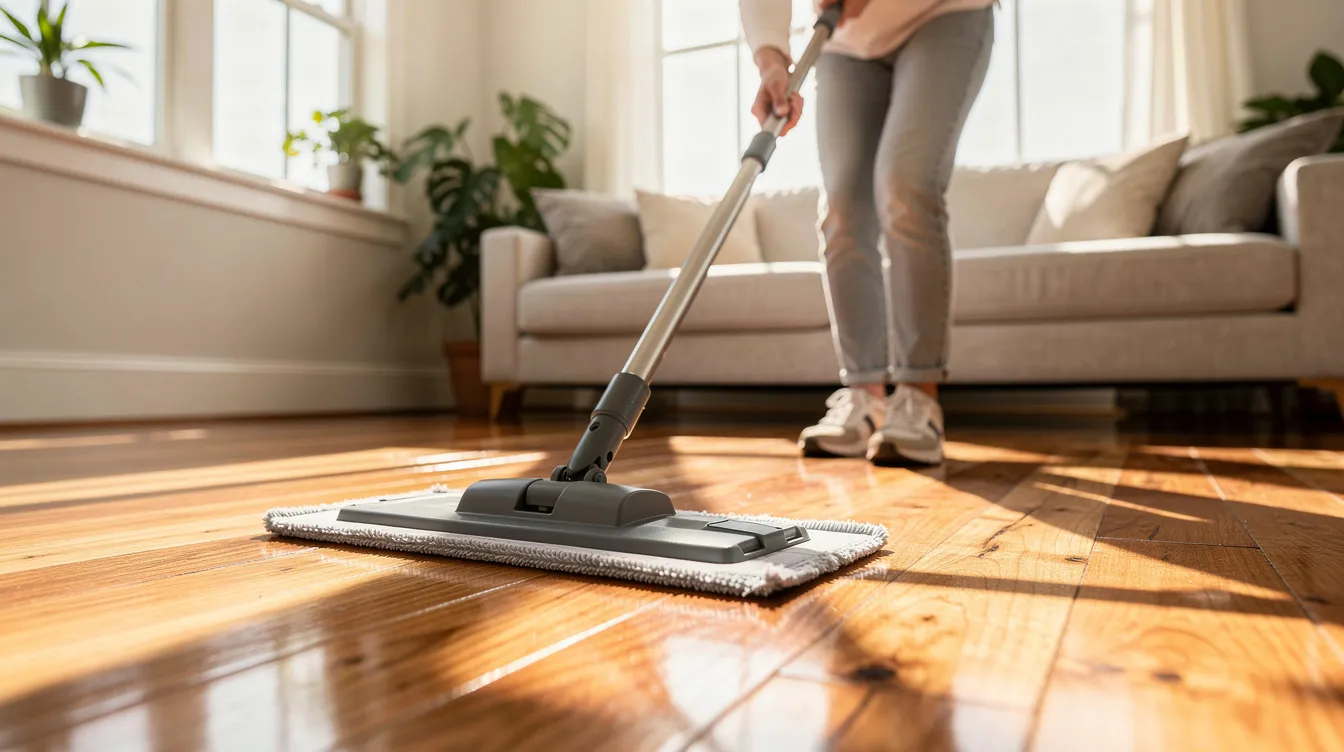
Monthly: Mop hardwood floors with a dedicated cleaning solution rated for sealed wood. Use a lightly damp microfiber mop, working in small sections. Avoid soaking wet mops as they can cause water damage to hardwood. Dry each section before moving on; standing water is the enemy.
Every 3 to 6 months (busy households) or yearly (quieter homes):
- Move light furniture and vacuum edges, under baseboards, and into corners.
- Use a soft nylon brush along seams between boards where grime collects.
- Use a manufacturer-approved floor cleaner and work with the grain.
- Call a professional for deep cleaning hardwood floors if buildup is beyond what household tools can handle. Professionals can help remove wax buildup on floors that were previously maintained with the wrong products.
Every 3 to 5 years: Apply a new coat of finish to rebuild the protective layer before it wears through to bare wood. A professional “screen and recoat” lightly abrades the existing finish and applies a new layer of polyurethane. This costs $2 to $4.50 per square foot, compared to $3 to $8 per square foot for a full sand and refinish. High traffic areas like entryways may need a new coat every 2 to 3 years.
Humidity, Temperature, and Seasonal Floor Maintenance
Wood expands and contracts with temperature and humidity changes. New England’s four seasons make indoor humidity control critical for maintaining wood floors.
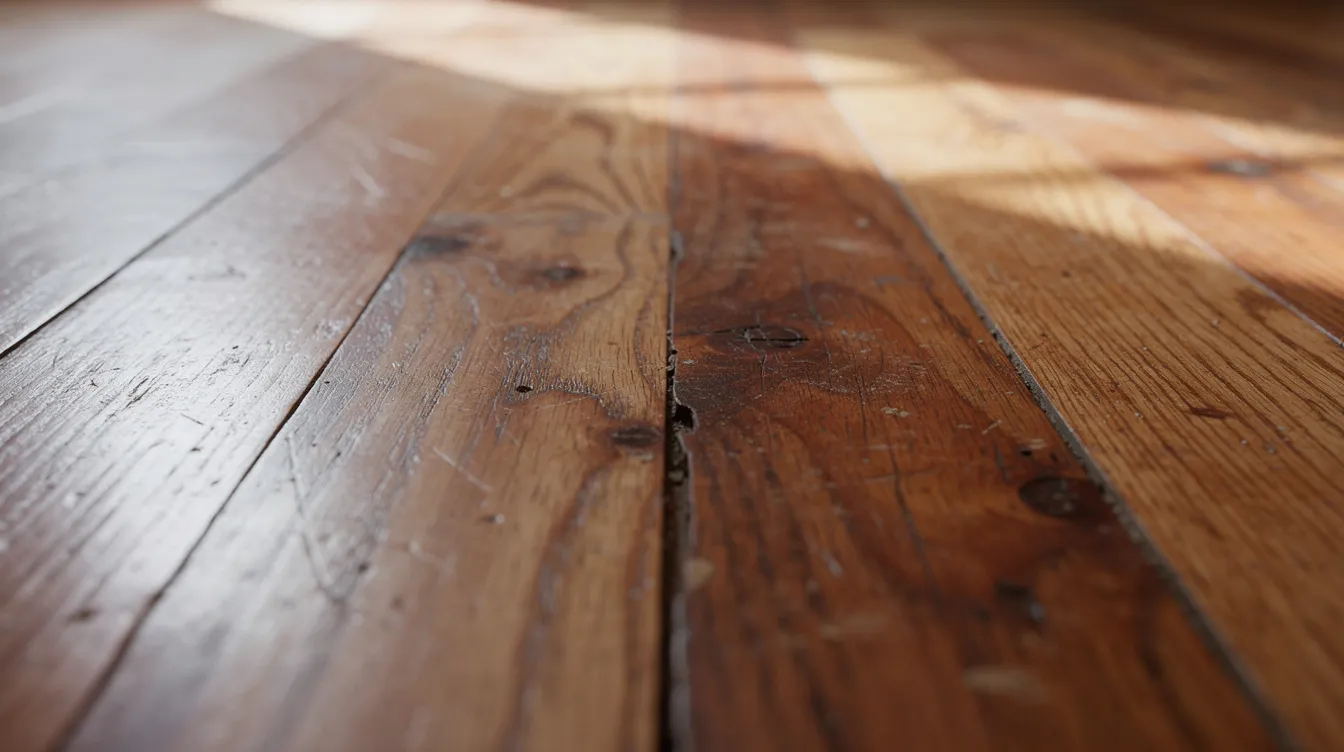
Maintain indoor humidity between 35% and 55% year-round. In Western MA, winter heating drops indoor humidity to 20 to 30% without a humidifier. Dry air in winter can cause hardwood floors to crack, and boards shrink enough to open visible gaps. A 6-inch-wide oak plank can shift 1/16 to 1/8 inch across its width with a 2 to 4 percentage-point change in moisture content.
Excess moisture in summer can cause hardwood floors to swell. July and August humidity in the Pioneer Valley often reaches 50 to 70% indoors, and excessive heat and moisture can cause hardwood floors to warp or cup. Air conditioning and dehumidifiers keep levels in check.
Seasonal checklist:
- Fall (Sep-Oct): Service your HVAC, confirm humidifiers work, seal drafty windows and doors.
- Winter (Dec-Feb): Run a whole-house humidifier; monitor indoor humidity; keep it above 35%.
- Spring (Mar-May): Inspect for gaps, cupping, or water damage near exterior doors and radiators. Wait for floors to stabilize before scheduling refinishing.
- Summer (Jun-Aug): Run AC or a dehumidifier; keep humidity under 55% on the first floor and in basements.
Engineered hardwood is more stable in fluctuating humidity environments because its cross-layered core resists expansion and contraction. In basements or over concrete slabs, common in older Western MA homes, engineered floors are less prone to cupping but still benefit from controlled humidity.
Preventing Scratches, Stains, and Surface Damage
Most damage to hardwood floors comes from everyday sources. A few cheap accessories and habit changes prevent the majority of it.
- Mats and area rugs: Use high-quality doormats at every exterior door to trap outdoor dirt and moisture before entering the home. Use mats at entryways to reduce dirt and scratches. Use breathable rug pads underneath rugs to prevent trapping moisture against the floor.
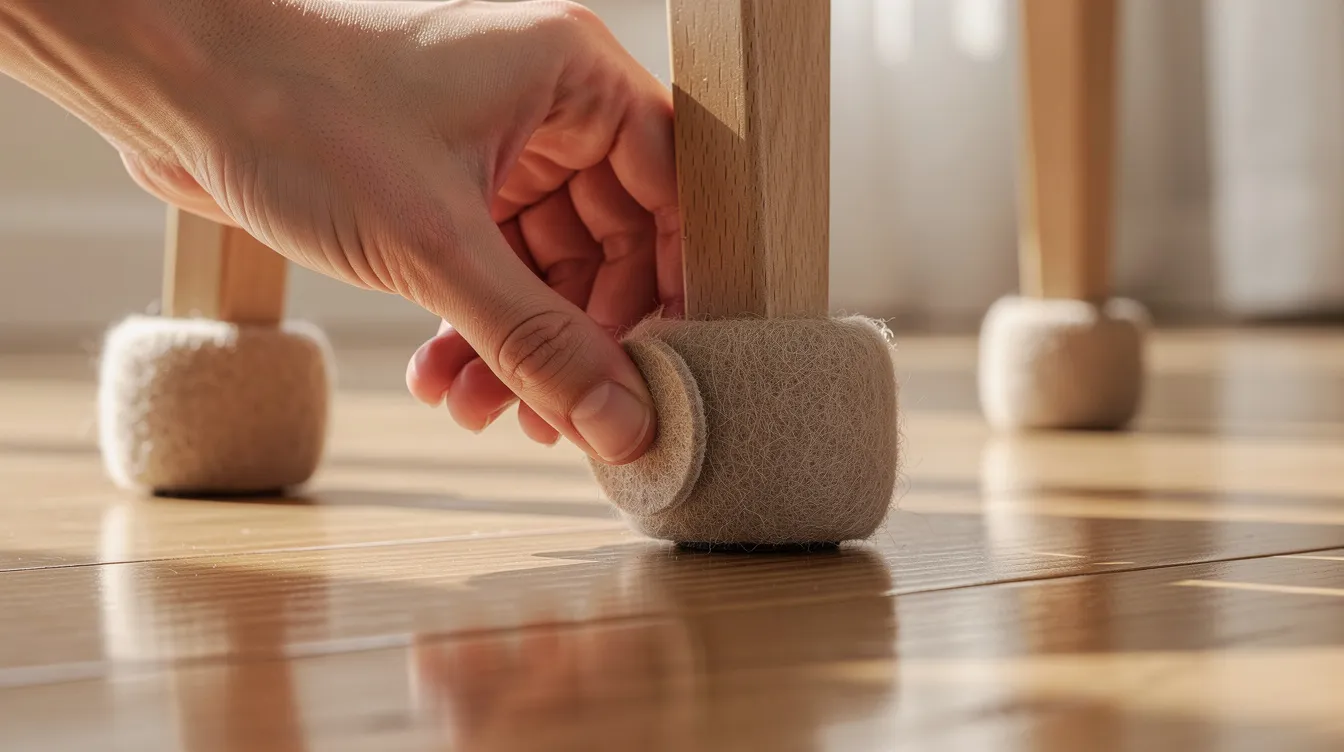
- Furniture protection: Protective pads under furniture prevent scratches on hardwood floors. Attach felt pads to all furniture legs: chairs, tables, sofas. Use sliders for heavy furniture. Never drag appliances across a bare floor.
- Shoes: High heels concentrate over 100 PSI on a tiny point and dent wood. Sports cleats do the same. A “no shoes indoors” rule cuts micro-scratch accumulation by an order of magnitude over years.
- Spills: Respond quickly to spills to prevent wood damage. Moisture can penetrate the finish and damage wood within minutes on unsealed surfaces. Use a microfiber mop or absorbent cloth to blot, then clean with a small amount of hardwood floor cleaner. Wipe stains immediately to prevent them from settling.
- Minor repairs: Surface scratches in the finish (light white marks) can often be buffed out during a recoat. Deep scratches or dark stains from pet urine may need board replacement or professional restoration.
What to Avoid: Cleaners, Tools, and Habits That Shorten Floor Life
Avoiding the wrong products matters as much as using the right ones.
Off-limits cleaners:
- Vinegar, lemon juice, or any acidic substance; these etch polyurethane over time.
- Ammonia, bleach, or harsh chemicals marketed as “multi-surface” that don’t specify hardwood safety.
- Wax polishes on polyurethane or aluminum oxide finished floors; wax blocks adhesion for any future new coat.
- Steam mops; hot vapor penetrates seams and causes swelling.
- Oil soaps that leave residue interfering with future recoats.
Off-limits tools and habits:
- Wet mops or string mops dripping with warm water.
- Abrasive pads, steel wool, or scouring powders on factory finishes.
- Rubber-backed mats left on damp floors for hours.
- Dragging heavy furniture or appliances without protection.
Using residue-leaving cleaners now makes a future screen and recoat fail to bond. One bad product choice can force a full sand and refinish years earlier than needed.
When to Call a Professional for Repair, Deep Cleaning, or Refinishing
Some problems go beyond what a mop and a bottle of floor cleaner can fix. Hire a professional for significant scratches or damage, and refinishing hardwood floors is best done by professionals with commercial-grade equipment.
Call a pro when you see:
- Black or gray stains under boards near plumbing fixtures, suggesting water damage or mold.
- Buckling or lifting boards after a leak or flood.
- Deep scratches or gouges exposing bare wood.
- Widespread dull, worn finish along traffic paths, stair landings, or in front of doors.
A screen and recoat abrades only the surface and adds a new layer of finish, keeping the existing stain and color intact. A full sand and refinish removes finish and wood down to a new surface, allowing stain changes. Solid hardwood with ¾-inch planks can handle multiple full refinishes over decades. Heavily worn or damaged sections can often be spot-repaired rather than replacing the entire floor; this preserves original materials in older homes.
Expert Flooring LLC inspects your floor on-site, measures the area, assesses whether boards are solid or engineered, and discusses options: spot repair, recoat, or full refinish. Every visit includes a free written estimate with cost and timeline.
If you’re a homeowner in Agawam, Westfield, Longmeadow, Springfield, Chicopee, Holyoke, or Enfield, CT, and your hardwood floors look dull, scratched, or water-damaged, schedule a free estimate. With the right approach to floor maintenance and timely professional help, your wood floors can keep your house looking its best for decades to come.