

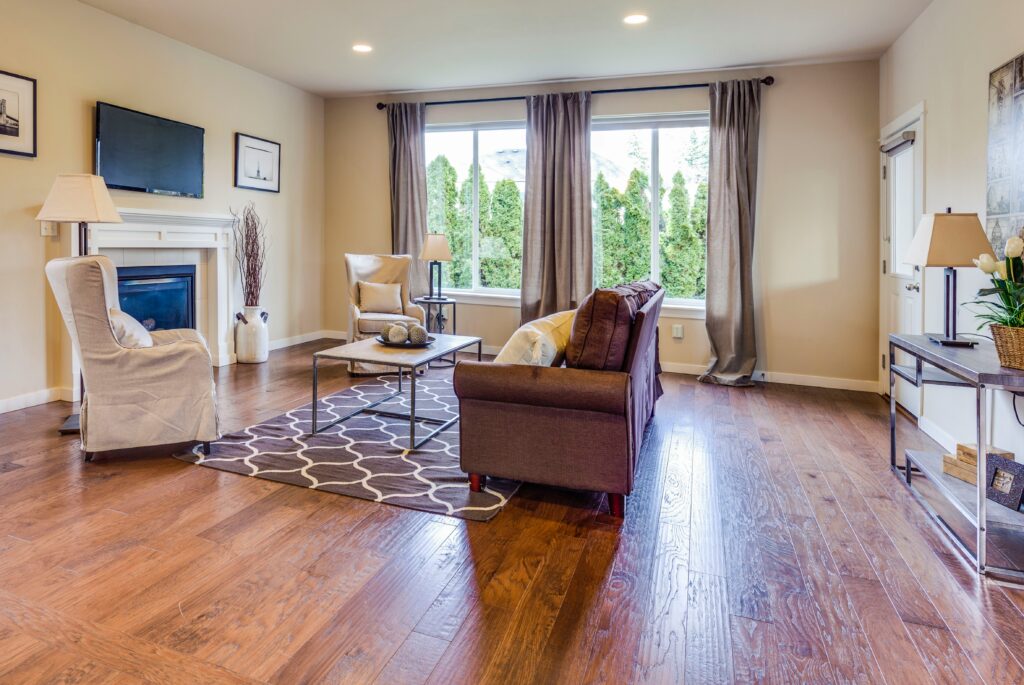
One of the most common questions we hear from homeowners in Springfield and Western Massachusetts is some version of this: “I only have damage in one area — do I really need to redo the whole floor?” It’s a fair question, and the good news is that in most cases, no — you don’t need to replace or refinish everything. Partial hardwood floor repair is not only possible, it’s often the smartest and most cost-effective path forward.
But there’s a catch. Repairing part of a hardwood floor is one of the more technically demanding things a flooring contractor does. Matching wood species, grain, color, and finish on a floor that’s been aging for years — sometimes decades — requires skill, patience, and the right approach. Done well, a partial repair is virtually invisible. Done poorly, it looks exactly like what it is: a patch.
This guide walks Massachusetts homeowners through everything you need to know about partial hardwood floor repair — what’s possible, what the challenges are, and why older New England homes present a unique set of considerations that most national guides don’t address.
Yes, You Can Repair Just Part of a Hardwood Floor
Let’s start with the straightforward answer. Replacing individual boards or a section of boards without touching the rest of the floor is completely standard practice in the flooring industry. It’s called board-by-board replacement, and when the damage is localized — a few boards near a doorway, a section around a leaking appliance, boards damaged by a pet — it’s almost always the right approach.
The alternative — tearing out an entire floor because a handful of boards are damaged — is rarely necessary and almost never cost-effective when the rest of the floor is in good shape. Our hardwood floor repair service is built around this exact approach: fix what’s damaged, preserve what isn’t, and make the repair blend so well you forget it was ever there.
The real question isn’t whether partial repair is possible. It’s whether the repair can be made to look seamless — and that depends on several factors specific to your floor.
The Biggest Challenge: Matching Old Wood to New
Here’s the honest reality of partial hardwood floor repair: new wood never looks exactly like old wood. Fresh boards straight from a supplier have a brightness and uniformity that aged, patinated hardwood simply doesn’t have. The existing floor has years — sometimes a century or more in older Springfield-area homes — of UV exposure, foot traffic, cleaning products, and seasonal humidity cycles baked into it. New boards don’t have any of that.
This is the central challenge of every partial repair job, and it’s where the skill of the contractor makes the biggest difference.
Wood species and dimensions. The first step is sourcing replacement boards that match the existing floor as closely as possible — same species, same width, same thickness, same profile. In newer homes this is relatively straightforward. In older Western MA homes with original floors, it can be more complicated. Pre-war homes often have wider planks, unusual species, or custom milled profiles that aren’t readily available at standard flooring suppliers. A good contractor knows where to source these materials or how to work around the challenge.
Grain and character. Even within the same species, wood grain varies enormously from board to board. Matching the grain character of aged oak or maple takes a trained eye and careful selection from available stock. Rushing this step results in new boards that look out of place even after finishing.
Color and stain matching. This is where most partial repairs either succeed or fail. Staining new boards to match floors that have faded and changed color over the years requires custom mixing, test applications, and careful layering — not just grabbing the closest off-the-shelf stain color. An experienced contractor tests stain samples on site under your home’s actual lighting conditions before committing to the final application.
Sheen level. The finish on your existing floor has a specific sheen — matte, satin, semi-gloss — that has also changed over time as the finish has worn. Matching the sheen of the repair to the surrounding floor is as important as matching the color.
Why the Room Often Needs Refinishing After Board Replacement
This is the part that surprises many homeowners: even when a board replacement is done skillfully, the repaired area may still be slightly visible if the surrounding floor isn’t refinished as well. The reason comes back to the aging factor. No matter how well the stain is matched, new boards sitting next to floors with decades of patina will have subtle differences in tone and character that a trained eye can detect.
The most reliable way to achieve a truly seamless result — especially in a main living area where the floors are highly visible — is to replace the damaged boards and then refinish the entire room. Refinishing after repair accomplishes several things at once: it levels the finish across old and new boards, allows the stain to be applied uniformly across the whole surface, and gives the entire floor a consistent sheen and appearance from edge to edge.
This is not always necessary. In lower-visibility areas, utility spaces, or when only one or two boards are being replaced in a floor with a relatively recent finish, spot blending can produce excellent results. But in living rooms, dining rooms, and open floor plans where the floors are a focal point, a room-wide refinish after repair is the standard recommendation — and the one that produces results homeowners are genuinely happy with long term.
If your floors need refinishing as part of the repair process, our floor refinishing service covers Springfield and the surrounding Western MA area.
The Older New England Home Factor
This is something national flooring guides rarely address, but it matters enormously for homeowners in Springfield, Agawam, Longmeadow, West Springfield, and the surrounding Pioneer Valley communities.
A large percentage of homes in Western Massachusetts were built in the early to mid 1900s, and many still have their original hardwood floors. These floors are genuinely different from modern flooring in ways that affect every partial repair job.
Thicker boards. Original hardwood floors from this era were often milled thicker than today’s standard 3/4 inch, meaning they’ve been refinished multiple times over the decades and still have plenty of wood left. This is good news — it means they’re usually excellent candidates for repair and refinishing rather than replacement.
Wider planks. Pre-war homes frequently have wider plank flooring — sometimes 4, 5, or even 6 inches — that isn’t standard today. Sourcing matching boards requires knowing where to look and sometimes having boards custom milled.
Unique species. Chestnut, heart pine, and other species that were commonly used in New England construction before World War II are no longer commercially available as new lumber. Repairing these floors requires salvaged material sourced from reclaimed wood suppliers — which adds complexity and sometimes cost to the repair process.
Multiple layers of finish. Floors that have been refinished several times over a century accumulate layers of finish history — different products, different sheens, different application methods. Understanding what’s on the floor before adding to it matters for how the repair blends and how the finish holds up.
None of these challenges make partial repair impossible — far from it. But they do make the contractor you choose significantly more important. Experience with older New England homes and their specific characteristics is not something every flooring contractor has.
When Partial Repair Makes Sense vs. Full Replacement
Partial repair is the right call when damage is limited to a specific area and the rest of the floor is structurally sound. It’s also the right call when the floor has significant character and history that’s worth preserving — which describes a lot of original hardwood floors in Western MA homes.
Full replacement starts to make more sense when damage covers more than roughly 30% of the floor, when the subfloor beneath has been compromised and needs to be fully accessed, when the floors have already been refinished so many times there’s no wear layer left, or when the homeowner wants to change the species, width, or direction of the flooring entirely.
For a detailed breakdown of how to think through this decision financially, check out our guide on hardwood floor repair vs. replacement — it covers the cost comparison and key decision factors in depth.
What to Expect from the Repair Process
When you hire Expert Flooring LLC for a partial hardwood floor repair, here’s how the process typically unfolds.
We start with a thorough assessment of the damaged area and the surrounding floor — looking at the species, dimensions, finish, age, and condition of the existing boards to understand exactly what we’re working with before sourcing any materials.
Next we source matching replacement boards as closely as possible given what’s available. For common species like red oak and maple, this is usually straightforward. For less common or discontinued species, it may take a bit more time to find the right match.
Once materials are in hand, the damaged boards are carefully removed without disturbing adjacent boards. This is skilled work — rushing it damages the surrounding floor and makes the repair harder to blend.
Replacement boards are installed, secured, and brought flush with the surrounding floor. Then the finishing process begins — custom mixing stain to match the existing floor, testing on site, and applying in layers until the color and sheen align as closely as possible with what’s already there.
If a full room refinish is recommended, that happens after the board replacement is complete, producing a uniform finish across the entire surface.
Get It Done Right the First Time
Partial hardwood floor repair done well is one of the most satisfying outcomes in this business — a floor that looks whole and beautiful again without the cost and disruption of full replacement. Done poorly, it’s a visible reminder of the damage every time you walk across the room.
At Expert Flooring LLC we’ve been doing this work in Springfield and Western Massachusetts for years. We know the older homes in this area, the flooring they contain, and the techniques required to make repairs that hold up and look right.
Contact us today for a free estimate and let’s take a look at what your floors actually need.